
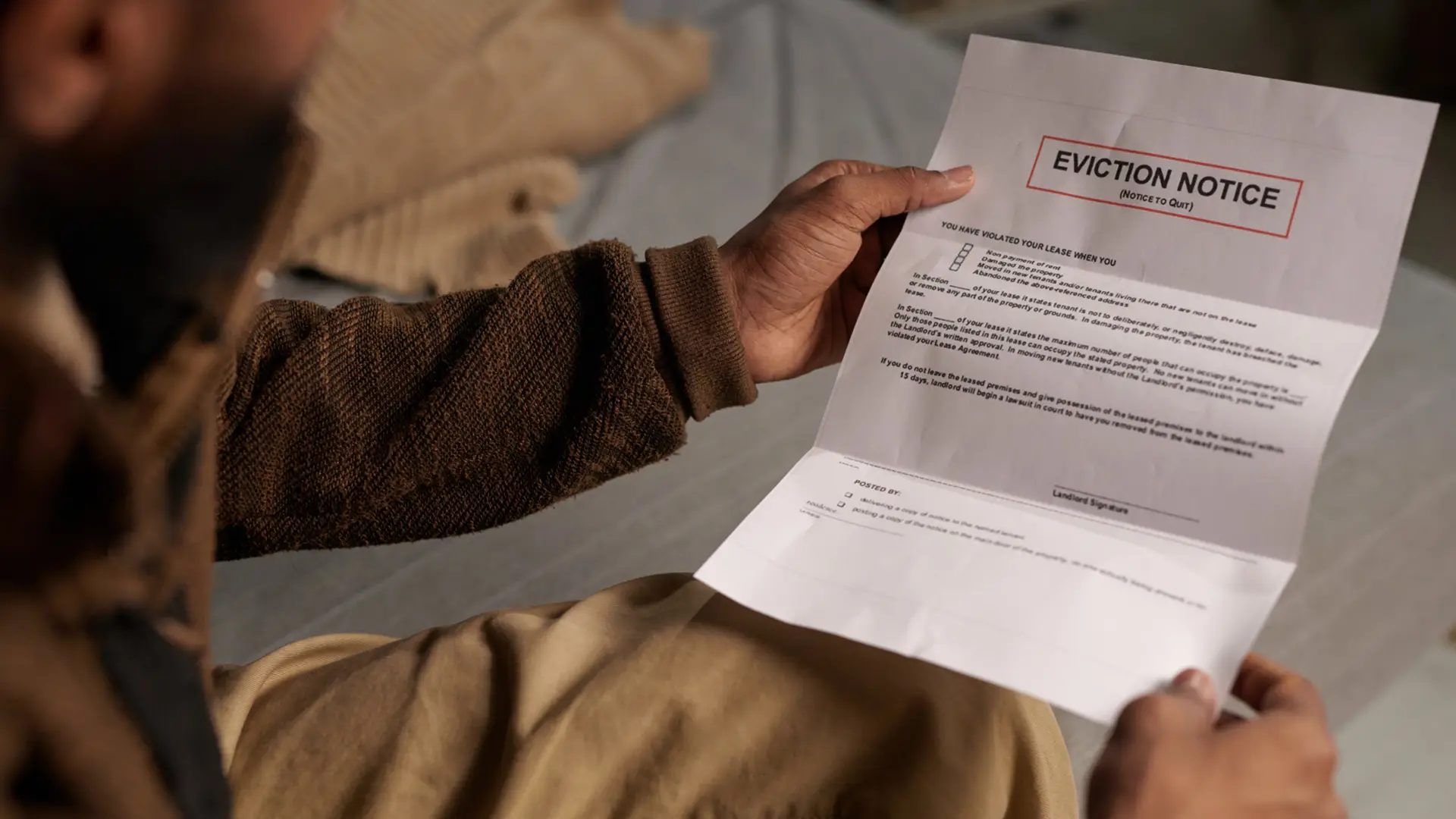
When people search for ‘how to fight eviction in California’, it is usually because something stressful has just happened. Imagine coming home after work and seeing an eviction notice taped to your door. Your mind starts racing. Do you have to leave right away? Is there anything you can do? Many tenants assume the landlord has all the power, but that is not always the case.
In reality, California has strong protections for renters. Learning how to fight eviction in California often begins with determining whether the landlord followed the proper legal steps. Landlords must provide proper notice, follow court procedures, and have a valid legal reason before removing a tenant. Tenants have the right to challenge an eviction if the process was not handled correctly.
For example, a tenant in San Diego once received an eviction notice after asking the landlord to fix serious plumbing leaks. A housing counselor later explained that this could fall under retaliatory eviction California protections because landlords cannot punish tenants for requesting repairs.
California law also protects renters from illegal removals under wrongful eviction laws. When tenants understand these rights and explore eviction defense strategies California residents can use, they may discover they have real options to challenge the eviction and stay in their homes.
How To Fight Eviction In California If the Eviction Notice Is Legally Flawed
One of the first things tenants learn when researching how to fight eviction in California is that not every eviction notice is valid. In fact, many eviction cases begin with notices that contain mistakes. If the notice is legally flawed, the eviction may be challenged in court.
Imagine you received a three-day notice demanding unpaid rent. You open the paper, and your stomach drops. Three days feels like no time at all. You start wondering if you will have to pack up your home immediately.
But when you read the notice more carefully, something seems off. The amount of rent listed is higher than what you actually owe. The notice also does not clearly explain how or where to make the payment. Situations like this happen more often than people think. Under California law, eviction notices must include accurate details and specific legal language. If key information is missing or incorrect, the notice may not be valid.
In cases like this, tenants may be able to challenge the notice and use it as part of how to fight eviction in California. Sometimes the first step in stopping an eviction is simply proving that the notice itself was not prepared correctly.
The Most Common Mistakes Landlords Make During Eviction Cases
When tenants start learning how to fight eviction in California, they are often surprised to discover that landlords make legal mistakes all the time. Eviction cases must follow a strict legal process. If a landlord skips steps or breaks the rules, the tenant may be able to challenge the eviction in court.
Below are some of the most common procedural mistakes landlords make.
Filing an eviction lawsuit too early
In California, landlords usually must wait until the notice period ends before filing an unlawful detainer case. For example, if a tenant receives a three-day notice, the landlord must wait those full three days. Filing earlier can make the case invalid.
Not serving the notice properly.
The way an eviction notice is delivered matters. A landlord cannot simply text a tenant or slip a note under the door without following legal rules. Proper service may include personal delivery, leaving the notice with another adult at the home, or mailing it correctly. Improper service can weaken an eviction case.
Trying a “self-help eviction.”
Some landlords attempt to force tenants out without going through the court process. They might change the locks, shut off utilities, or remove a tenant’s belongings. This is called a self-help eviction, and it is illegal in California. Landlords must use the legal eviction process and cannot remove tenants on their own.
FAQs
What is the first step in how to fight eviction in California?
The first step is carefully reviewing your eviction notice. Check for errors in the notice, incorrect dates, or missing legal information. Many tenants can challenge an eviction if the notice does not follow California law.
What are common eviction defense strategies California tenants use?
Tenants often challenge improper notices, prove payment of rent, claim habitability issues, or show that the eviction is retaliatory. These strategies help protect tenants in court and may delay or stop eviction.
What counts as wrongful eviction law violations?
Evictions are considered wrongful if a landlord removes a tenant without legal cause, fails to provide proper notice, or tries to bypass the court process. California law protects tenants from illegal evictions.
How can I use a tenant’s affirmative defenses in court?
Tenant affirmative defenses allow you to explain why the eviction should not proceed. Examples include landlord harassment, failure to maintain the property, discrimination, or retaliation for requesting repairs.
What is a retaliatory eviction in a California case?
A retaliatory eviction happens when a landlord tries to evict a tenant for reporting safety violations, requesting repairs, or exercising legal rights. These are illegal under California law and can be challenged in court.
When should I hire an eviction lawyer for tenants?
Hire a lawyer if the case is complex, the landlord has ignored legal procedures, or if you are facing immediate court deadlines. A lawyer can help you gather evidence, file defenses, and represent you in court.
Can I fight an eviction notice if it was delivered incorrectly?
Yes. If a landlord fails to serve the notice properly, such as leaving it in the wrong place or not following legal delivery rules, the eviction may be invalid. Proper service is required by law in California.
How long do I have to respond to an eviction notice?
The time depends on the type of notice. For example, a three-day notice for unpaid rent gives you three days to respond before the landlord can file in court. Responding quickly is essential to protect your rights.
Can I stay in my home while fighting eviction?
Often yes. Filing a response in court or using legal defenses can delay the eviction process. In some cases, tenants can remain in their homes until a judge makes a final decision.
How does The Law Firm For Tenant Rights, Inc. help tenants?
We guide tenants through every step of the eviction process, identify landlord mistakes, use legal defenses, and connect clients with experienced eviction lawyers for tenants to protect their housing rights.
How a Tenant Rights Lawyer Can Help
At The Law Firm For Tenant Rights, Inc., we understand how stressful receiving an eviction notice can be. We help tenants navigate the complex California eviction process, identify mistakes landlords may have made, and use eviction defense strategies in California to protect your home.
Whether you are facing a retaliatory eviction in California, a notice that violates wrongful eviction laws, or need guidance on tenant affirmative defenses to eviction, we work with you every step of the way. Our team also connects you with an experienced eviction lawyer for tenants who can represent you in court, negotiate with landlords, and ensure your rights are fully protected.
Don’t wait until it’s too late. Contact us today to schedule a consultation and learn how we can help you fight eviction and stay in your home.